
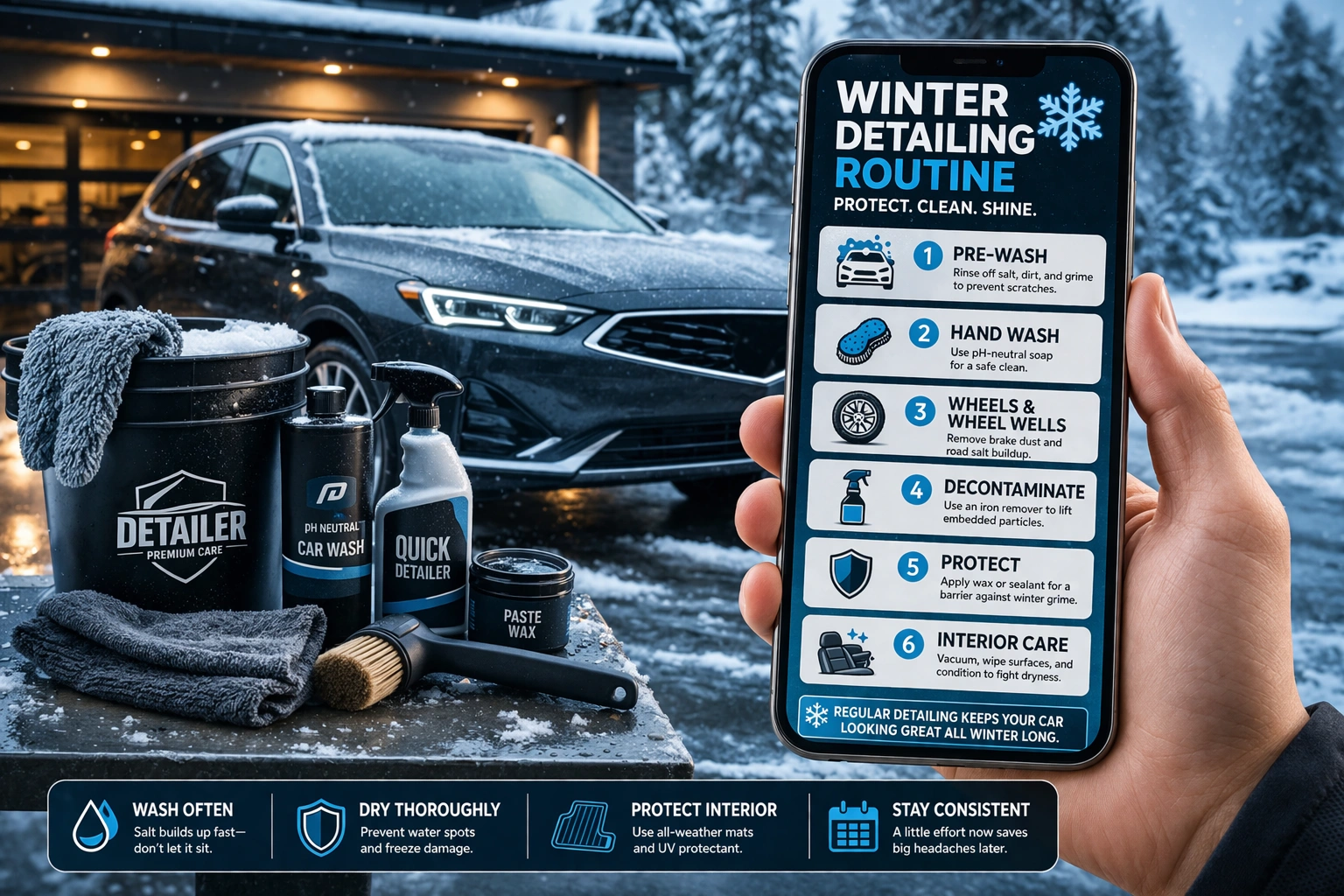
A Smart Winter Detailing Routine That Protects Paint
Road salt, brine, and magnesium chloride — the three chemicals used by most northern U.S. states to de-ice roads — actively corrode steel brake lines, frame components, and electrical connectors at ambient temperatures above 20°F. A proper winter detailing routine isn’t cosmetic; it is the difference between a car that survives a Midwest winter without undercarriage rot and one that loses $2,000–$5,000 of trade-in value to corrosion. The routine runs on a 10–14 day cycle and takes 45 minutes per session when you have the right setup.
Why winter corrosion is different
Traditional rock salt (sodium chloride) is only active down to about 15°F. Magnesium chloride and calcium chloride brines, which most northern states now apply pre-storm as a liquid, are active down to −10°F and −25°F respectively. They are also hygroscopic, meaning they draw moisture out of the air and stay wet on metal surfaces long after the car has dried from the last drive.
The result: even a car parked in a garage retains a thin layer of reactive brine on the underbody for days after the last salty commute. Corrosion continues while the car sits. A rust-prevention routine works by neutralizing and rinsing this brine on a schedule.
The 10-day rinse cycle
Every 10–14 days during brine season (typically November through April in salt-belt states), the car should receive a full undercarriage rinse. This is the single most impactful winter routine — much more important than exterior washing for paint appearance.
What "full undercarriage rinse" means:
- Drive through a touchless car wash with undercarriage spray (the rotating nozzle arm beneath the car) — roughly $8–$12 per session
- Or rinse at home with a garden hose or pressure washer, aiming up under wheel wells, along frame rails, and along the exhaust path
- Pay particular attention to the rear fender well, the rocker panel lower edge, and the subframe crossmembers — these trap brine the longest
Commercial truck washes (for over-the-road trucks) often allow passenger vehicles at $15–$25 per wash and provide meaningfully better undercarriage coverage than consumer-grade automatic washes. In the Midwest and Northeast, many towns have at least one accessible truck wash within 20 miles.
Annual pre-winter treatment
Before the first salt application (typically October in northern states), apply an undercoating or anti-corrosion treatment. Four common options with realistic pros and cons:
- Fluid Film (lanolin-based): $12–$18 per can, DIY-applicable with a pressurized spray can, needs reapplication every 12–18 months, does not harden. Professional application: $150–$350. Industry favorite among private users.
- Krown T40 (petroleum-based): available through Krown's franchise network, $125–$180 annual application, thin oil-like coating that penetrates seams, does not harden, self-renewing for 12 months. Popular in Canada and the upper Midwest.
- NH Oil Undercoating: $160–$260 annually at licensed shops, similar to Krown, slightly thicker formula.
- Hard-shell undercoatings (dealer-offered "lifetime" rustproofing): avoid. Hard coatings crack over time, trap moisture between the coating and the metal, and create hidden corrosion pockets that are far worse than untreated metal.
Consumer Reports and the Canadian Automobile Association both rate lanolin or oil-based annual-reapplication products as the most effective long-term rust prevention. Single-application hard undercoatings consistently rate lowest.
Exterior wash cadence in winter
Winter exterior washes should target salt removal, not paint shine. A minimum routine:
- Touchless automatic wash every 7–10 days when roads are salted
- Hand wash when temperature allows (above 35°F, full sun) using pH-neutral shampoo only — alkaline soaps strip wax and sealant faster in cold weather
- Apply a winter-grade spray sealant (CarPro Hydro2, Gyeon CanCoat, Chemical Guys HydroSlick) monthly for the season
Avoid brush-style automatic washes in winter. Cold weather makes rubber bushings stiff and abrasive grit sticks to brushes longer, accelerating swirl-mark accumulation.
Wheel and tire care
Salt brine dries as a white residue on wheels and is visibly obvious. More importantly, it aggressively attacks:
- Brake caliper clear coat (leads to rust bleed on caliper faces)
- Wheel bearings (corrosion can shorten bearing life 40–50%)
- TPMS valve stems (aluminum stems corrode where they meet the rubber grommet)
- Lug nut capped finishes (common on acorn-style nuts with decorative caps)
A weekly wheel-focused rinse with clean water (even temperatures as low as 20°F with quick-dry towels) meaningfully reduces long-term wheel and brake component corrosion. Dedicated acid-free wheel cleaners (Sonax Full Effect, CarPro IronX, P&S Brake Buster) should be used monthly to remove iron particles that embed in the clearcoat and rust in place.
Interior: the overlooked half of winter detailing
Road salt tracks in on shoes and carpets faster than it accumulates outside. The typical winter interior concern sequence:
- Weeks 1–4: white salt stains on floor mats and carpet
- Weeks 4–8: salt penetrates into carpet fibers where vacuuming does not reach
- Weeks 8–16: carpet padding beneath the visible carpet absorbs moisture from tracked-in slush
- Spring: musty smell and visible water line on lower door seals
Winter interior routine:
- Swap in rubber all-weather floor mats (WeatherTech, Husky Liners, Molded Rubber Floor Mats) for the entire season — throw away carpet mats until spring
- Empty and rinse rubber mats outside every 2 weeks
- Spray Folex or CarPro Inside on carpet fibers monthly to neutralize salt and lift stains
- Deep-clean upholstery once mid-winter and again at spring thaw
Below-freezing wash precautions
Washing in subfreezing temperatures creates specific risks:
- Frozen door locks and handles: residual water in door jamb gutters refreezes into the weather seals. Use de-icing silicone spray on door seals before any sub-32°F wash and open/close each door after drying.
- Cracked trim from thermal shock: do not direct hot water at cold windshield or plastic trim. Use warm (not hot) water, or wash inside a heated bay.
- Frozen locks on fuel doors and trunks: apply a light lithium grease to mechanical catches at the start of the season.
Frequently asked questions
How often should I wash my car in winter?
Undercarriage rinse every 10–14 days when roads are salted; full exterior wash every 7–10 days. The undercarriage schedule matters far more — one skipped underbody wash after a salted storm can do more corrosion damage than weeks of missed exterior washes.
Is an automatic car wash safe in winter?
Touchless washes are safe and effective for salt removal. Brush-style washes cause paint swirl damage year-round and are worse in winter. Prefer touchless or self-serve bays with pressure washers.
Do I need to wax my car in winter?
A sealant or ceramic topper is more useful than wax in winter. Sealants last longer in cold and hydrophobic performance helps salt brine sheet off the paint rather than dry onto it. Apply a spray sealant monthly during the season.
Is professional undercoating worth it?
For vehicles in salt-belt states held 5+ years, yes. Annual Fluid Film or oil-spray applications at $150–$300 are substantially cheaper than the $1,500–$4,000 in corrosion-related depreciation and premature rust-through repair that unprotected vehicles can accumulate by year 7–10.
What is the best time of year to start a winter routine?
Apply annual undercoating in October before the first salt event. Switch to winter floor mats at the same time. Begin the 10-day undercarriage rinse cycle with the first salted road condition, typically early November in the upper Midwest and Northeast.