
How Mileage Limits Work on Car Leases
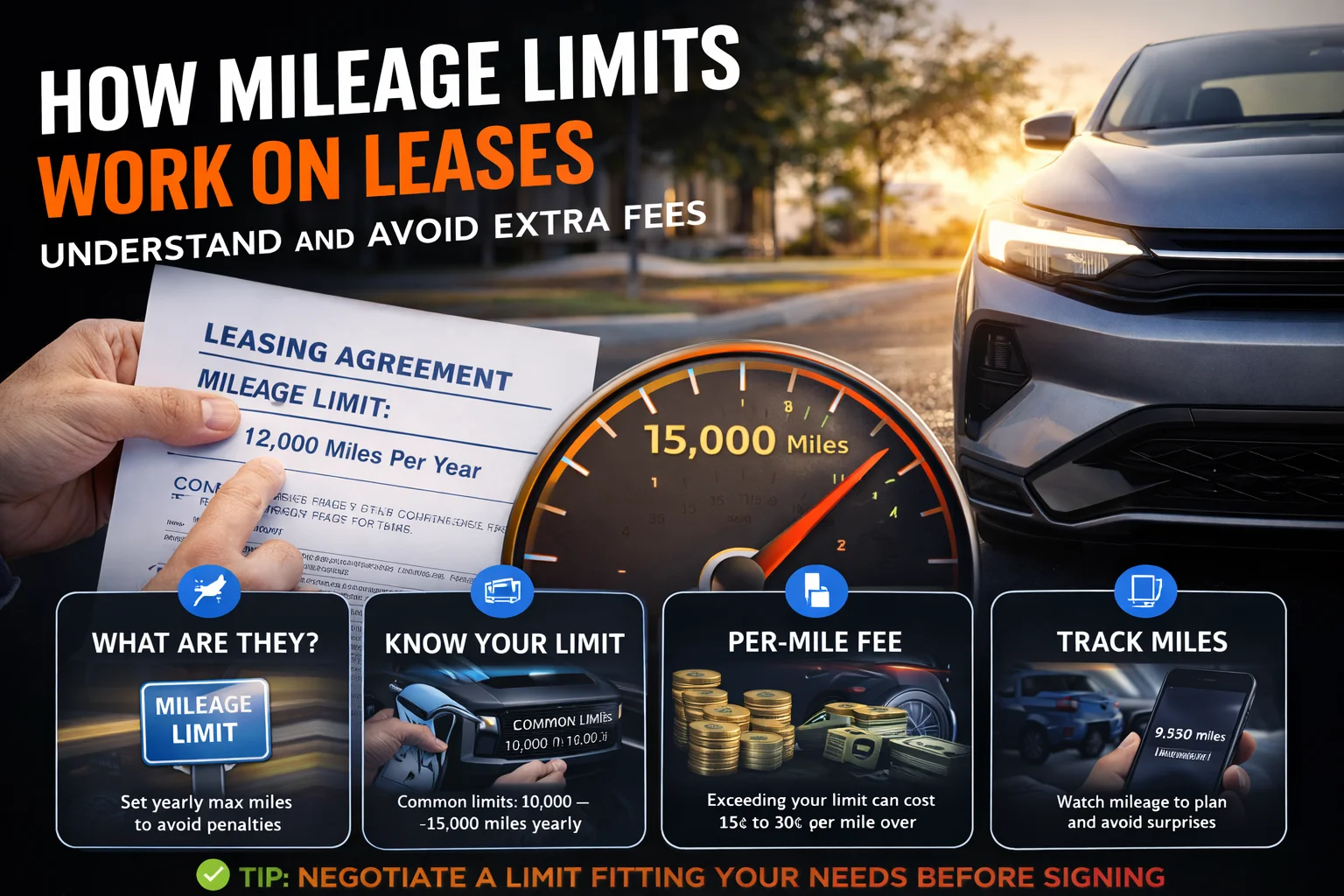
Standard U.S. auto leases include 10,000, 12,000, or 15,000 annual miles, with anything beyond priced at $0.15–$0.30 per mile at turn-in. Miles can be purchased up front at roughly half the post-lease rate, which is almost always a better deal if you know you will exceed. The mileage limit is also one of the few lease terms where dealers have meaningful negotiation flexibility, because the residual value of the vehicle at lease-end is directly tied to expected mileage. Here is how the math actually works, what dealers will and won’t negotiate, and when to walk away rather than accept an overage bill.
How mileage affects residual value
A lease is structured around two numbers: the capitalized cost (the negotiated purchase price of the vehicle) and the residual value (what the vehicle is expected to be worth at lease-end). The monthly payment covers the difference, plus money factor (interest) and fees.
Residual value is set by the leasing company using the Automotive Lease Guide (ALG) tables, which project depreciation based on make, model, trim, term, and assumed annual mileage. Higher annual mileage means more depreciation, which means a lower residual, which means a higher monthly payment — or a higher overage fee if you blow past the included mileage.
The ALG tables publicly show that each incremental 1,000 miles per year reduces residual by roughly 0.5–1.0% of MSRP for mainstream vehicles. On a $45,000 SUV with a 3-year lease, adding 3,000 miles per year to the contract typically raises residual-cost absorption by $675–$1,350 over the full term — spread over 36 months, $19–$38 per month.
The three standard tiers
- 10,000 miles/year (30,000 total on 3-year): Rare outside of low-mileage urban drivers. Offered as a discount tier on some lease specials. Underpriced for most drivers — turn-in penalty risk is high.
- 12,000 miles/year (36,000 total on 3-year): The default. Fits the average U.S. passenger-car driver (EIA data shows 13,500 as the national mean, so 12,000 is already tight for above-average drivers).
- 15,000 miles/year (45,000 total on 3-year): The upgrade tier. Typical added cost is $20–$40 per month versus 12,000. Worth it for anyone who drives above the national average or has reason to expect high mileage in the lease term.
The math: when to buy extra miles up front
Most manufacturers allow purchasing extra miles at $0.08–$0.12 per mile at lease signing — roughly half the post-lease rate of $0.15–$0.30. The break-even is straightforward: if you expect to exceed the contract by 1,000+ miles per year, buy them up front.
Worked example: 3-year lease at 12,000 annual (36,000 total). Expect to drive 14,000 annual (42,000 total). The 6,000-mile overage:
- Paying at turn-in at $0.20/mile: $1,200
- Pre-purchasing 6,000 miles at $0.10/mile: $600
- Savings by pre-purchasing: $600 over the lease life
The one catch: pre-purchased miles are typically non-refundable. If you end up under the contract, the money stays with the leasing company. Pre-purchase only when you are confident of exceeding.
Ways to avoid overage charges without pre-purchasing
- Turn in early if you are close to a limit. Many manufacturer lease-ends have a 30-day grace period at the end of the term. If you are 800 miles over a 36,000 limit and the turn-in date is 6 weeks away, turning in 10 days early may keep you under the threshold.
- Trade in to the same manufacturer before turn-in. Toyota, Honda, BMW, and others routinely waive overage fees when the lessee leases a new vehicle of the same brand. A $1,200 overage can be erased if the dealer wants the new lease commitment.
- Buy out the lease. If the vehicle will be worth more than the residual on the used market (common for Toyota, Honda, and anything in high demand), buying out the lease avoids overage charges entirely because you retain the vehicle. A 3-year-old Toyota Tacoma lease with a $28,500 residual and a current market value of $33,000 is a $4,500 windfall that also erases any overage penalties.
- Transfer the lease. Companies like Swapalease and LeaseTrader allow passing the remaining months (with mileage liability) to another driver. If the new lessee accepts the miles, you walk away with no overage exposure.
Excess wear and tear: the other turn-in surprise
Mileage overage is the headline; excess wear-and-tear charges are the silent cost. Industry-wide, average wear-and-tear invoices on 3-year leases run $800–$2,200 based on J.D. Power lease retention data. Common charges:
- Tires below 4/32" tread depth: $150–$300 each
- Wheel curb scuffs: $150–$400 per wheel
- Windshield chips over 1/4"/ and cracks: $50–$350
- Interior stains beyond normal: $100–$500
- Dents over 1" diameter: $100–$600
- Missing or aftermarket components (roof racks, mud flaps, spare keys): $75–$500 each
Pre-inspection programs (offered free 30–60 days before turn-in by most manufacturers) let you see what will be charged and fix issues at independent shops for 30–70% less than the dealer.
How to negotiate mileage at lease signing
Unlike vehicle price, mileage tiers are priced into the residual at the factory level and cannot usually be discounted outright. However, dealers have flexibility on two related levers:
- Acquisition fee waiver or reduction if you choose a higher mileage tier (typical acquisition fees are $695–$995).
- Cap-cost reduction equal to the incremental cost of a higher mileage tier. Ask the dealer to reduce the negotiated price by the same dollar amount that the 15,000-mile tier adds monthly × term length.
When leasing at all stops making sense
If you consistently drive over 20,000 miles per year, leasing is almost always the wrong choice. At that mileage:
- The highest available lease tier (usually 15,000) falls 5,000+ miles short annually
- Overage fees pile up rapidly ($1,500–$4,500 over 36 months)
- Wear-and-tear charges are higher on a heavily-used vehicle
- The vehicle has material resale value at what would be lease-end mileage, which financing and ownership let you capture
For high-mileage drivers, financing a reliable compact SUV and keeping it 5–7 years almost always beats leasing on total cost.
Frequently asked questions
What happens if I turn in a lease with 40,000 miles on a 36,000 contract?
You pay 4,000 miles × the contract's overage rate. At the common $0.20/mile, that is $800 due at turn-in. Some manufacturers round miles up to the nearest 1,000; most charge exact.
Can I negotiate a higher mileage allowance on a lease special?
Usually not without losing the special rate. Advertised lease specials (e.g., “$299/mo, 10,000 miles”) are structured around the specific mileage tier. Upgrading typically requires taking the standard rate, which may erase the advertised discount.
Does the federal mileage deduction apply to leased vehicles?
Yes, business use of a leased vehicle qualifies for the standard mileage deduction at the current IRS rate ($0.67 per business mile for 2024, published each November for the following year). You can deduct lease payments proportionally instead, but not both. Most lessees using the vehicle for business choose whichever method produces a larger deduction.
Is a “high-mileage lease” a real product?
A few manufacturers (Ford, GM) offer genuine 18,000 or 20,000-mile lease tiers, typically reserved for commercial fleet programs. Retail consumers usually max out at 15,000 miles. If your dealer offers 18,000 or higher on a retail lease, confirm the residual value is standard — a custom high-mileage tier with an inflated residual is effectively a disguised loan.
Can unused miles be refunded at turn-in?
No. Unused miles are forfeit. This is why pre-purchasing extra miles at signing is a gamble: useful if you exceed, wasted if you fall short. Track mileage monthly during the lease and adjust driving habits rather than pre-pay.